A non-government entity powered by Avid Health Associates LLC, a health insurance agency.
Medicare Plans
We specialize in Medicare — simplifying the process and making suggestions based on your needs. Our help is completely free.
Get No-Cost Assistance Today →People who are new to Medicare often have a hard time sorting things out in the beginning. There are all these parts and plans with similar letters, which makes it hard to figure out what is what.
The massive amount of mail that people new to Medicare receive certainly doesn’t help either!
It is not unusual for a local client to bring in a whole bag of mail that he has received at home and ask for our help to identify which things should be kept or tossed out.
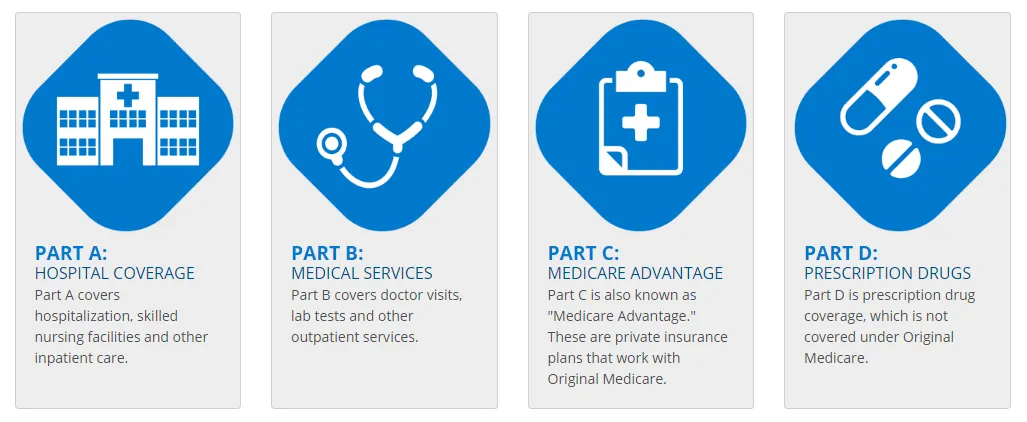
Leaving employer coverage to transition to Medicare as your primary insurance can be overwhelming because it’s all new to you. Never fear though; it’s a painless process when you know the proper steps to take. You can find most of the information you need about Medicare planning right here on this website.
Medicare planning can help you avoid penalties and get the most out of your benefits.
First, you need to know that the only parts of Medicare you will enroll in via the Social Security office is your Original Medicare Parts A & B. All other Parts and supplemental coverage enrollments are done outside that, through an licensed insurance agent or agency.
Also, if you are already taking Social Security, the government will auto-enroll in both parts of Medicare. Otherwise, you must enroll yourself.
Want easy Medicare? We’ve put together a New to Medicare checklist. It includes a bonus worksheet for you to calculate your potential costs for Medicare. You can register for that here right here on this page.
The steps you will take will likely be different when you are still working. Many people work past age 65 these days, and this means there are decisions to make.
Should you keep your employer coverage and enroll in Medicare too so that it coordinates with your other insurance? Or is it more cost-effective to leave that employer coverage and choose Medicare as primary insurance and add a supplement?
The answers depend on several factors, such as the size of your employer and how much you pay for your portion of that employer’s coverage. Visit our New to Medicare with Employer Coverage page for a rundown on your options.
At age 65 you are eligible for Medicare, regardless of whether you are already taking Social Security income benefits. Some people also qualify for Medicare earlier than 65 due to a disability or illness.
No, but there are significant penalties for late enrollment unless you have other creditable medical coverage, such as from a large employer.
Social Security offers you a quick online application for Medicare that can be completed in fewer than ten minutes. You do not have to be receiving income benefits to get Medicare. Just visit the Social Security website and follow the links about applying for Medicare.
For most people, your Initial Enrollment Period (A 7-month window in which you should enroll in Part A and Part B to avoid late enrollment penalties) is the best time to sign up for Medicare.
If you are feeling bewildered about Medicare, there is no need to go through this on your own. Our friendly, knowledgeable, no-hassle licensed insurace agents can walk you through this process step by step. We start by teaching you the basics so that you understand your Original Medicare coverage.
That’s the key to deciding which kind of supplemental coverage works best for you when you are new to Medicare.
Once your policy is in place, you will also have the peace of mind that comes from knowing that we are just a phone call away when you need help with how your policy works.
Best of all – our service is free! Find out how it feels to have Avid Health on your side.
Call (561) 783-4042 or click here:
We help you find the right Medicare plan
Your monthly premium is paid directly to the carrier
Your premium is the same as enrolling direct